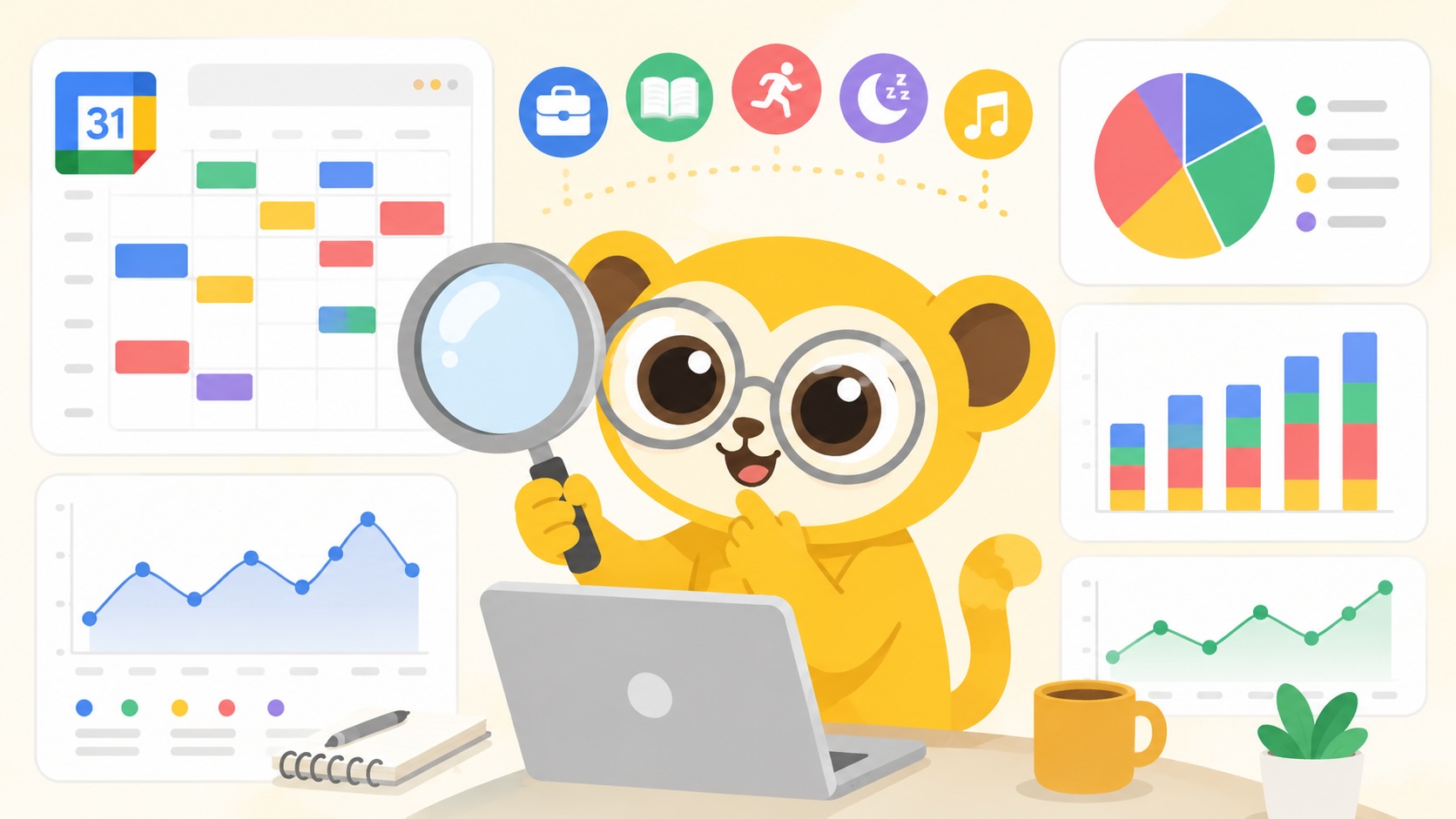
“Quantified Self” is the idea of tracking and analyzing your behaviors, habits, and physical condition using data.
By turning daily activities into measurable data, you can better understand things like:
- Where your time actually goes
- Which habits are consistent
- What makes your good days different from your bad days
In recent years, more people have started practicing Quantified Self thanks to smartwatches and tracking apps.
For example, people track things like:
- Sleep duration
- Exercise
- Heart rate
- Weight
- Meal logs
- Study time
- Work hours
to reflect on their lifestyle and routines.
One of the biggest benefits of self-tracking is that it helps you review your life using data instead of feelings.
For example, you might think:
“I feel like I’ve been studying a lot lately.”
“I feel too busy to properly rest.”
But when you actually review your records, you may discover things like:
- Your study time was lower than expected
- You actually had enough break time
- Only certain weekdays were extremely busy
and these unexpected insights are often valuable.
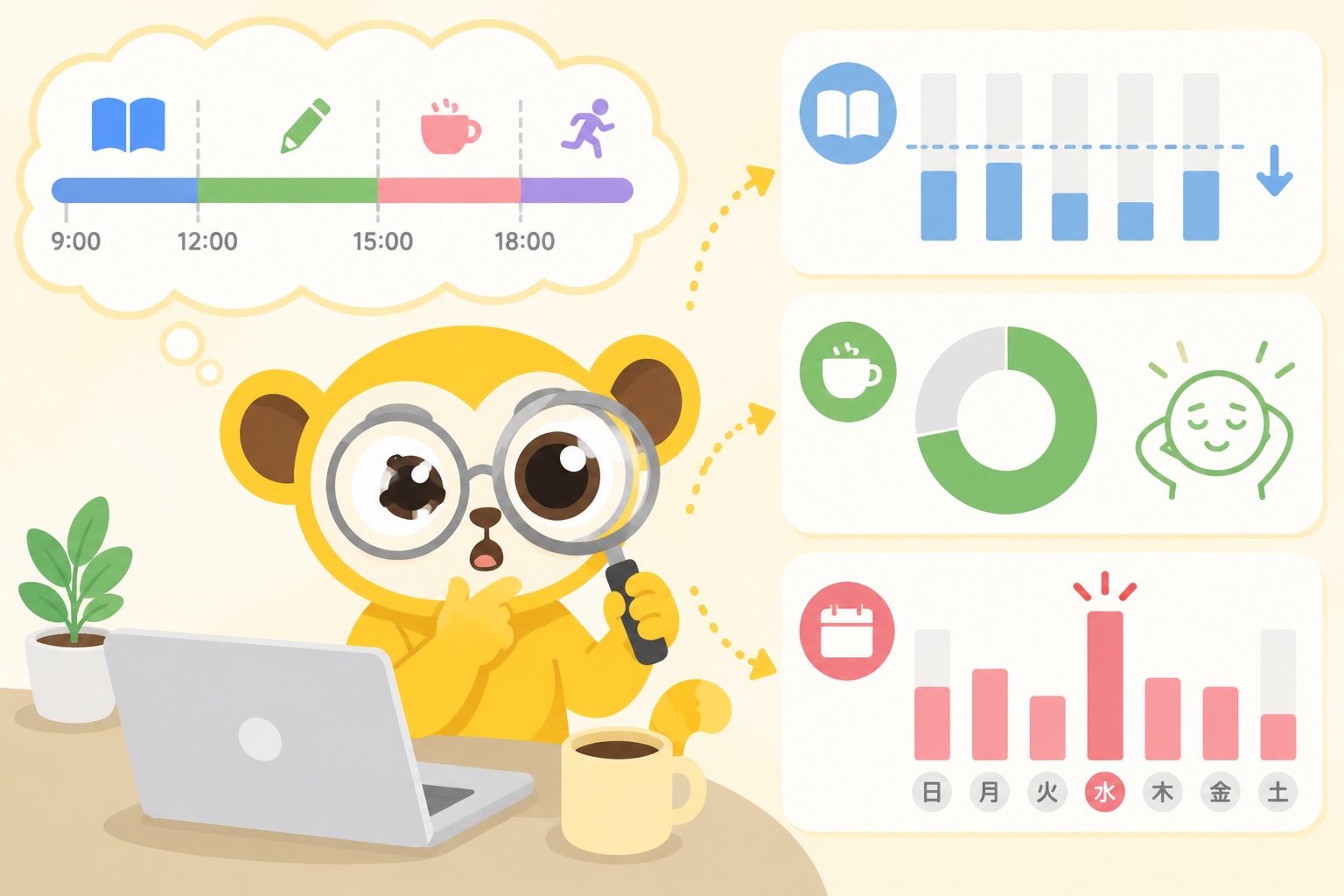
Among all kinds of self-tracking data, how you spend your time is especially important.
Time is limited for everyone.
Understanding how much time you spend on:
- Work
- Learning
- Hobbies
- Exercise
- Rest
can help improve both your lifestyle and productivity.
However, many people do not accurately understand things like:
- How much time they spend working
- Whether their study time is increasing
- Whether they get enough exercise or rest
- Whether they spend too much time in meetings
- When they are most focused and productive
This is where Google Calendar becomes useful.
Google Calendar naturally accumulates records of your daily activities and schedules.
In other words, without using a separate tracking app, you already have data showing:
- When
- What
- How long
you spent doing something.
Kotomil aggregates and analyzes your Google Calendar events to visualize your time usage with charts and analytics.
For example, you can view:
- Time ratios by activity
- Trends over time
- Total tracked time
- Average time
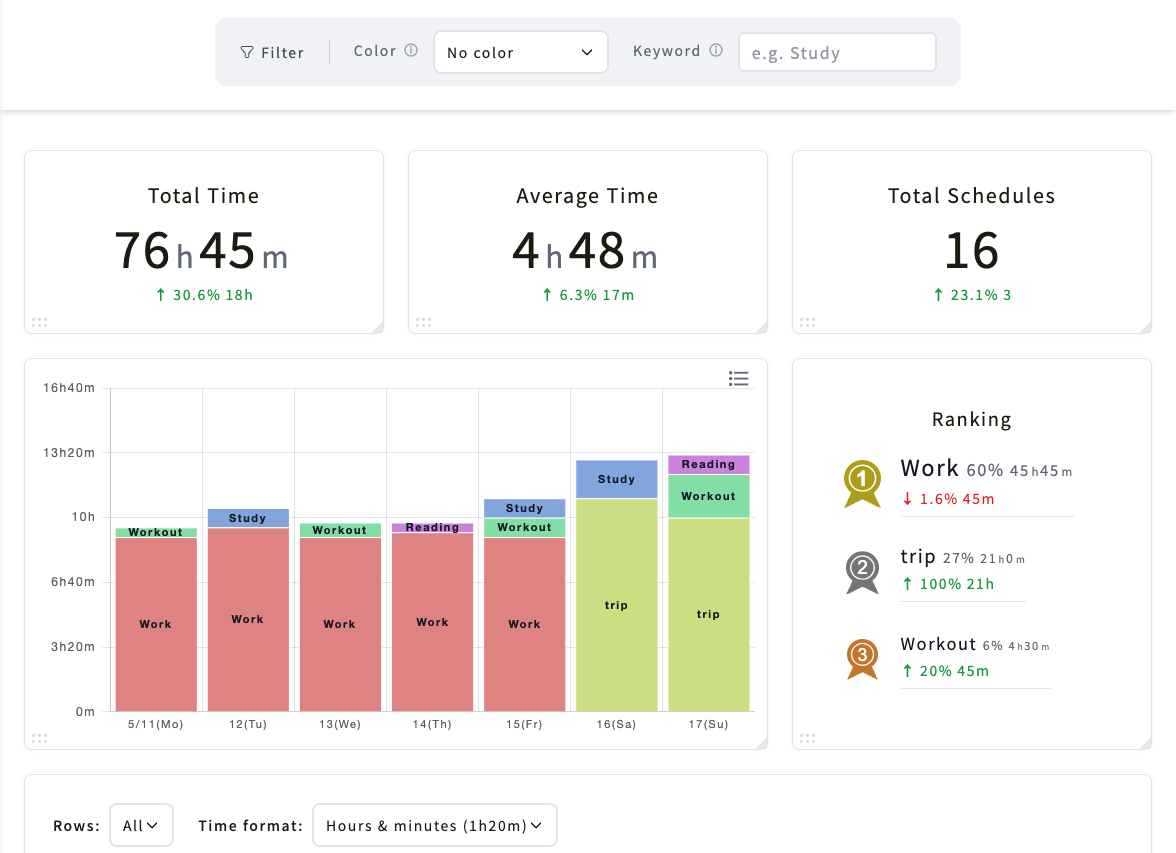
This makes it easier to visually discover patterns such as:
- Work taking up most of your week
- Activities concentrated late at night
- Exercise time decreasing
- Study habits staying consistent
As a result, it becomes easier to make practical improvements like:
“I should make more time to rest.”
“I should schedule focused work in the morning.”
“I should secure at least 30 minutes of study time every day.”
Instead of using Google Calendar only for schedule management, you can use it as a time-based Quantified Self tool to objectively reflect on your habits, routines, and lifestyle.