How to Prevent Burnout by Understanding Where Your Time Goes
Many people don’t realize they’re approaching burnout until they’re already exhausted.
At first, it feels manageable:
“I’m just busy this week.” “I’ll rest after this project.” “I only need to push a little harder.”
But over time, work, studying, meetings, responsibilities, and constant pressure begin to pile up.
Without noticing it, your schedule slowly loses balance.
You stop exercising. You sleep less. You spend less time on hobbies, friends, and recovery.
And eventually, you begin feeling:
Constant mental fatigue
Loss of motivation
Difficulty concentrating
Emotional exhaustion
A sense that every day feels the same
One reason burnout happens so easily is because most people never clearly see how they actually spend their time.
That’s why time tracking and calendar analysis can be so powerful.
When your schedule becomes visible, patterns become visible too.
You begin to notice things like:
✅ “I’ve been working late almost every day.” ✅ “I haven’t exercised in weeks.” ✅ “My weekends are slowly turning into workdays.” ✅ “I spend almost no time recovering mentally.”
This awareness helps you make small adjustments before burnout becomes serious.
In this article, you’ll learn:
How to use Google Calendar to understand your workload
How to identify burnout risk patterns
How Kotomil helps visualize work-life balance and recovery time
And how calendar insights can help create a healthier routine
1. Burnout Often Starts with Invisible Imbalance ⚠️
Burnout rarely happens overnight.
It usually develops gradually through repeated imbalance between work, recovery, and personal time.
For example:
Too many meetings
Long work hours
Constant studying without breaks
Lack of sleep
No time for hobbies or exercise
The problem is that these changes often happen slowly enough that we stop noticing them.
That’s why visualizing your schedule can be extremely helpful.
When you can clearly see how your time is distributed, it becomes easier to identify unhealthy patterns early.
2. Use Google Calendar to Track Your Daily Life 🗓️
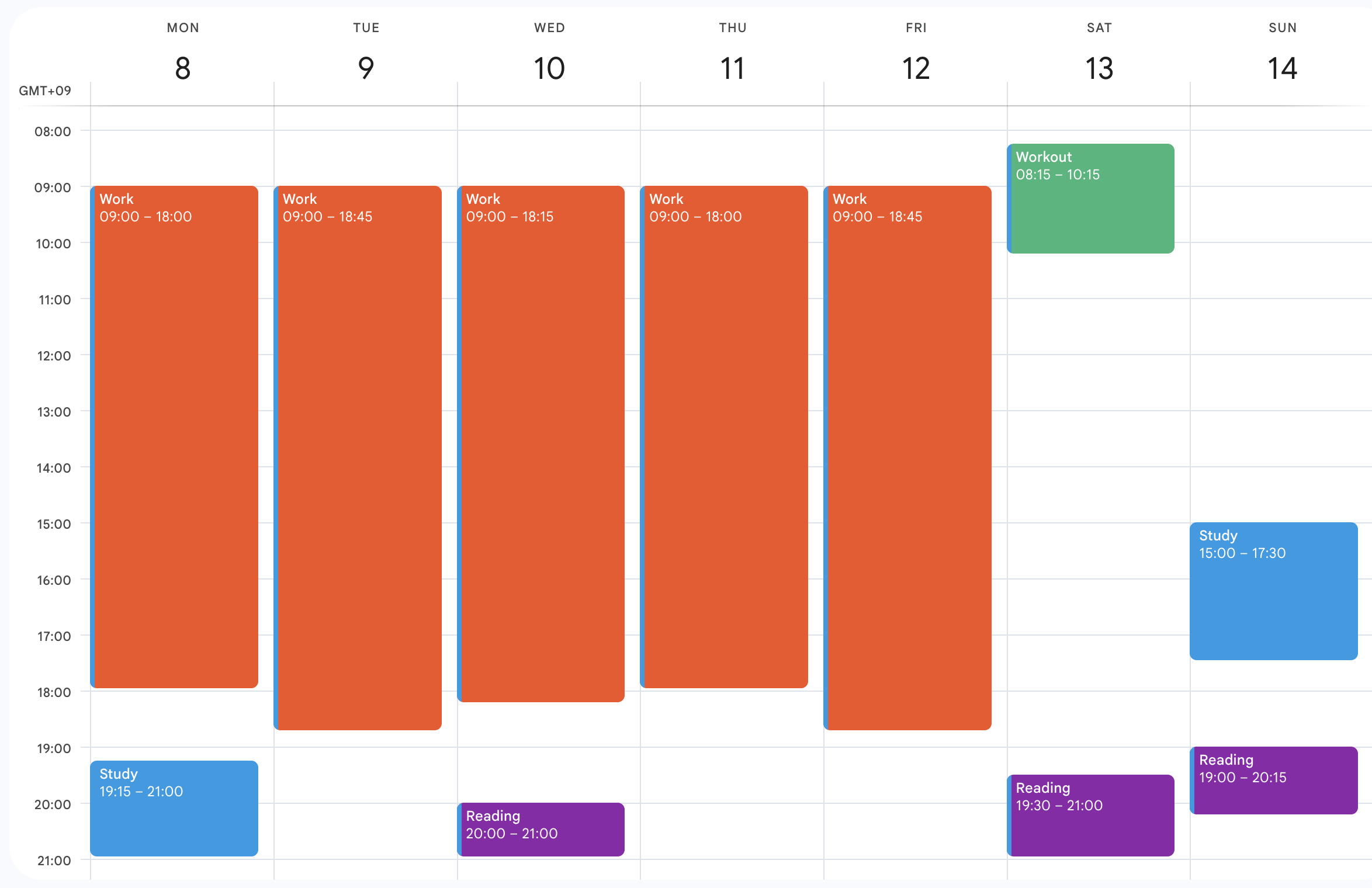
One of the easiest ways to understand your habits is by recording daily activities in Google Calendar.
For example:
Work
Meetings
Study
Workout
Reading
Family Time
Sleep
Personal Time
Using colors for categories also makes patterns easier to recognize.
For example:
Red = Work
Green = Workout
Blue = Study
Purple = Personal Time
You don’t need perfect tracking.
The goal is simply to create enough visibility to understand how your lifestyle is changing over time.
3. Analyze Burnout Risk Patterns with Kotomil 📊
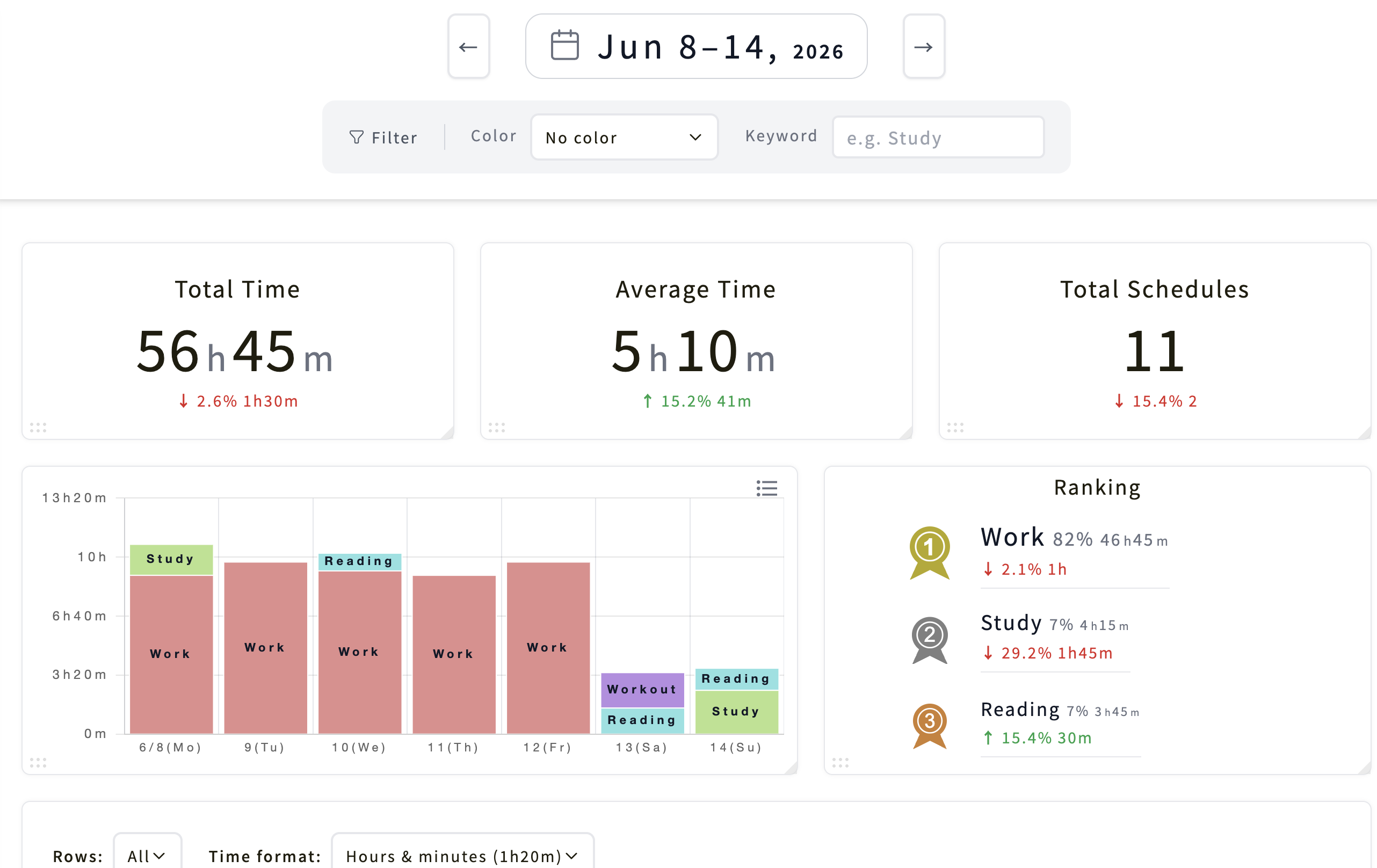
Once your schedule is recorded, Kotomil can automatically visualize your calendar data with charts and analytics.
Instead of looking at scattered events individually, you can understand your overall balance at a glance.
For example, you might notice:
Work taking up 80% of your week
Almost no recovery time
Exercise becoming less consistent
Increasing late-night schedules
This kind of awareness is often difficult to notice without visualization.
Kotomil helps you analyze:
Total work hours
Time balance by category
Weekly and monthly trends
Activity consistency
Lifestyle changes over time
By seeing these patterns clearly, you can make healthier decisions before exhaustion becomes overwhelming.
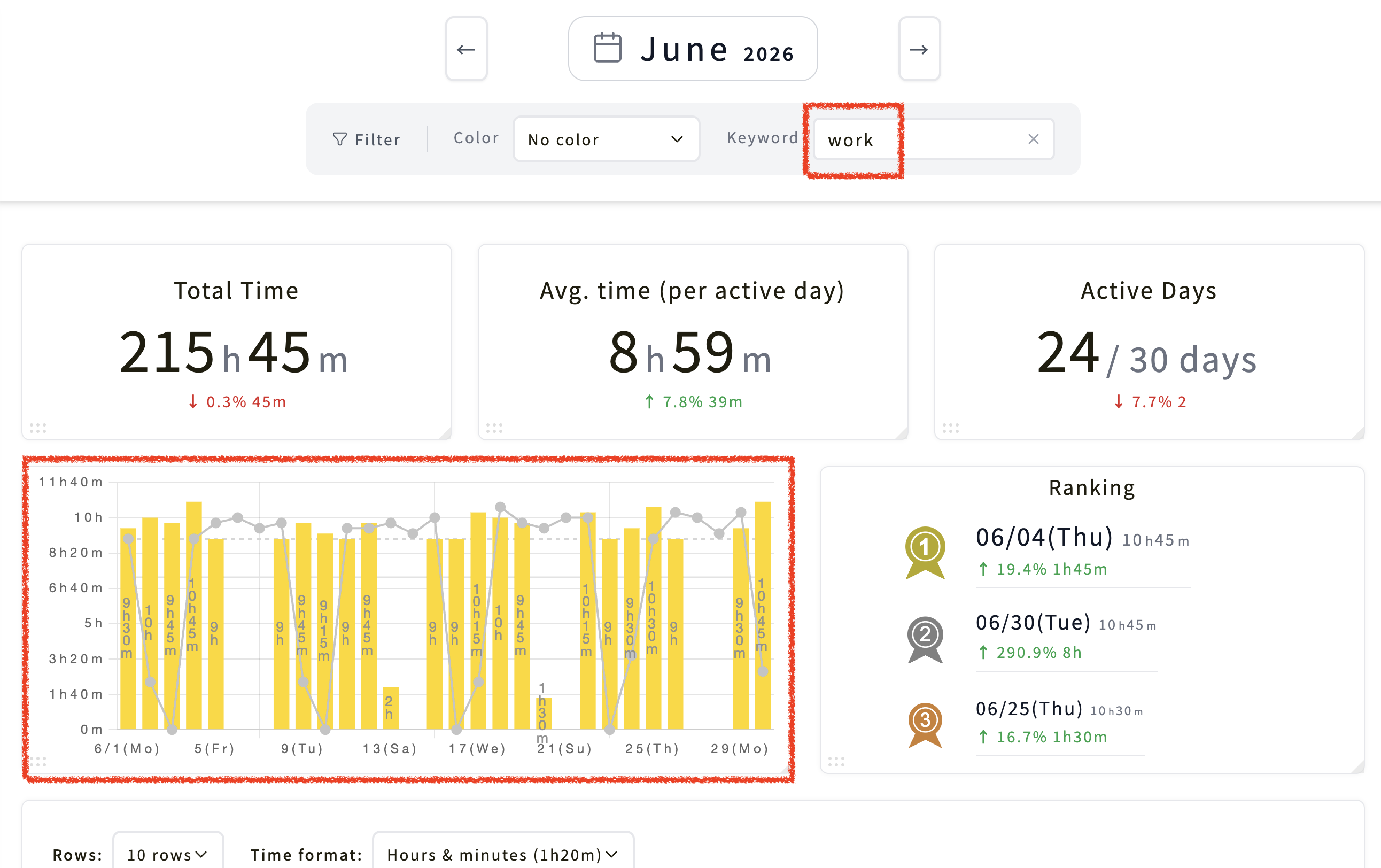
3-1. Discover Lifestyle Trends Over Time
Burnout is usually caused by long-term imbalance, not just one busy day.
That’s why trend analysis is important.
For example, if you track keywords like:
Work
Meeting
Workout
Sleep
Study
you can visualize changes over weeks or months.
You may realize things like:
“My workload has increased every month.”
“I stopped exercising after changing jobs.”
“I’ve been working during weekends more often.”
“My recovery time keeps shrinking.”
These insights help you recognize burnout risks before they become severe.
4. Burnout Prevention Is About Balance, Not Productivity 🌱
Many people think burnout prevention means “working less.”
But in reality, it’s often about balance and recovery.
Healthy routines usually include a mix of:
Focused work
Rest
Exercise
Social time
Hobbies
Sleep
Reflection
When one category dominates your life for too long, stress accumulates.
Visualizing your schedule helps you step back and objectively ask:
“Am I recovering enough?”
“What consumes most of my energy?”
“What activities make me feel better?”
“What habits disappeared from my life recently?”
This kind of self-awareness is one of the most effective ways to avoid long-term burnout.
5. Understand Your Life Through Calendar Insights ✨
Most people rely on feelings to judge their work-life balance.
But feelings can be misleading when stress becomes normal.
Calendar analysis provides a more objective perspective.
By visualizing your time with Kotomil, you can better understand:
Your workload
Your recovery habits
Your consistency
Your personal balance
And how your lifestyle changes over time
Burnout prevention starts with awareness.
And sometimes, simply seeing where your time goes is the first step toward building a healthier and more sustainable life.
See where your time goes from your calendar at a glance📊🔍
With Kotomil, just connect Google Calendar to see how much time you spend on each area in charts and lists. It also helps you find what is making you busy and where your time is becoming unbalanced.